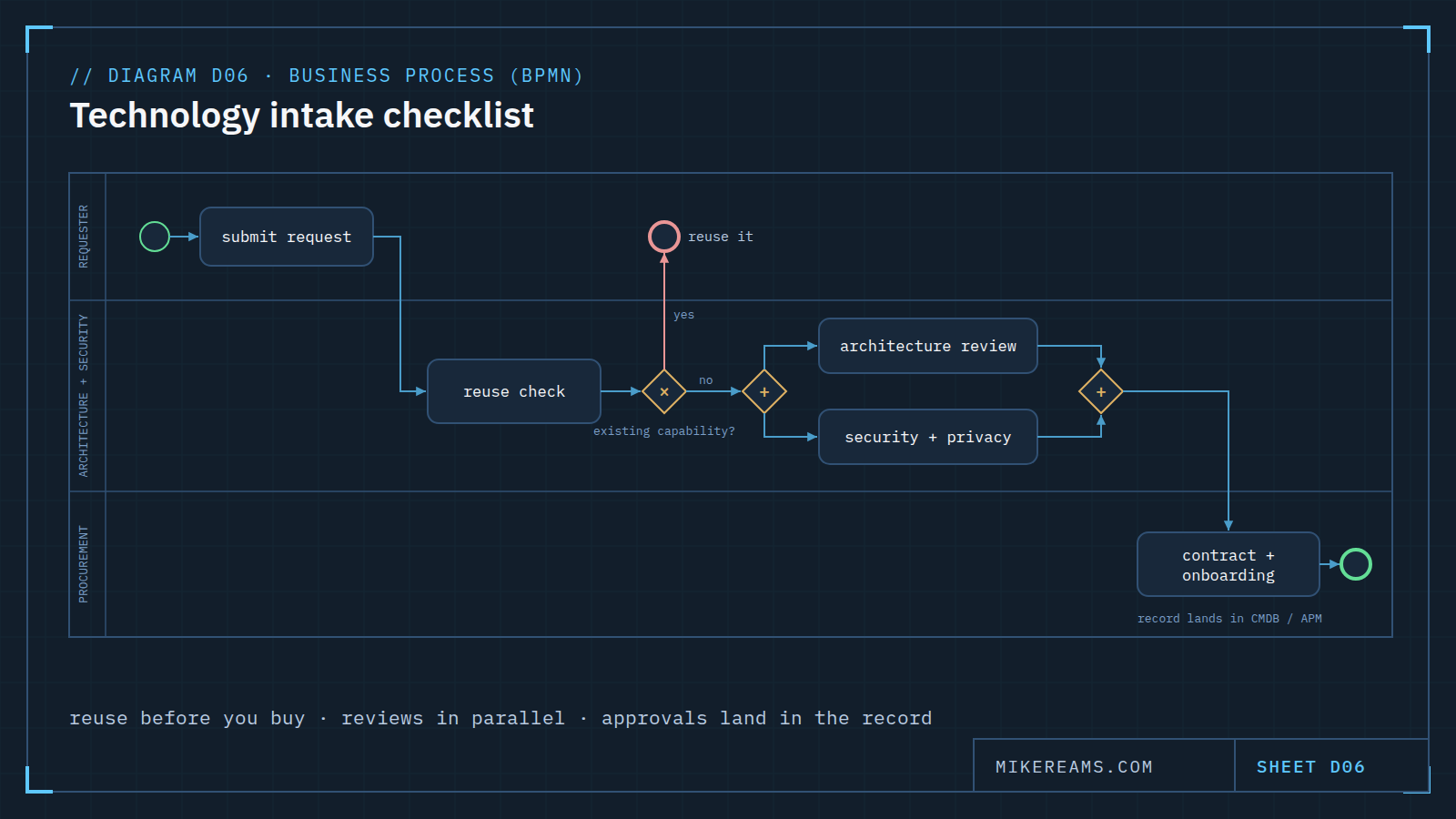
A technology intake process decides what happens between “we want to buy this” and “it is live.” This version, drawn in BPMN, puts the cheapest question first, runs the expensive reviews side by side instead of one after another, and makes sure every approved purchase ends up as a record someone can find later.
Reading the diagram
Lanes show who does each step: the requester, architecture and security, and procurement.
Circles are start and end events; a thick border marks an end.
Rounded boxes are tasks.
Diamonds are gateways: × picks one path, + runs paths in parallel and waits for both.
The steps
Submit the request with the business need, the data involved and the expected users.
Reuse check: if an existing capability already covers the need, the process ends there.
Parallel reviews: architecture checks fit, overlap and integration; security and privacy check data classification, vendor risk and sign-in.
Contract and onboarding once both reviews pass.
Record it: the purchase lands in the CMDB and the application portfolio as the right kind of record.
Common mistakes
Reviews in series, so a request waits weeks for each team in turn.
Skipping the reuse check, which is how organizations end up with three tools for one job.
Approving without a record, so the next audit cannot tell what was bought or why.