DGM · Business Process
Application Portfolio Metamodel Process
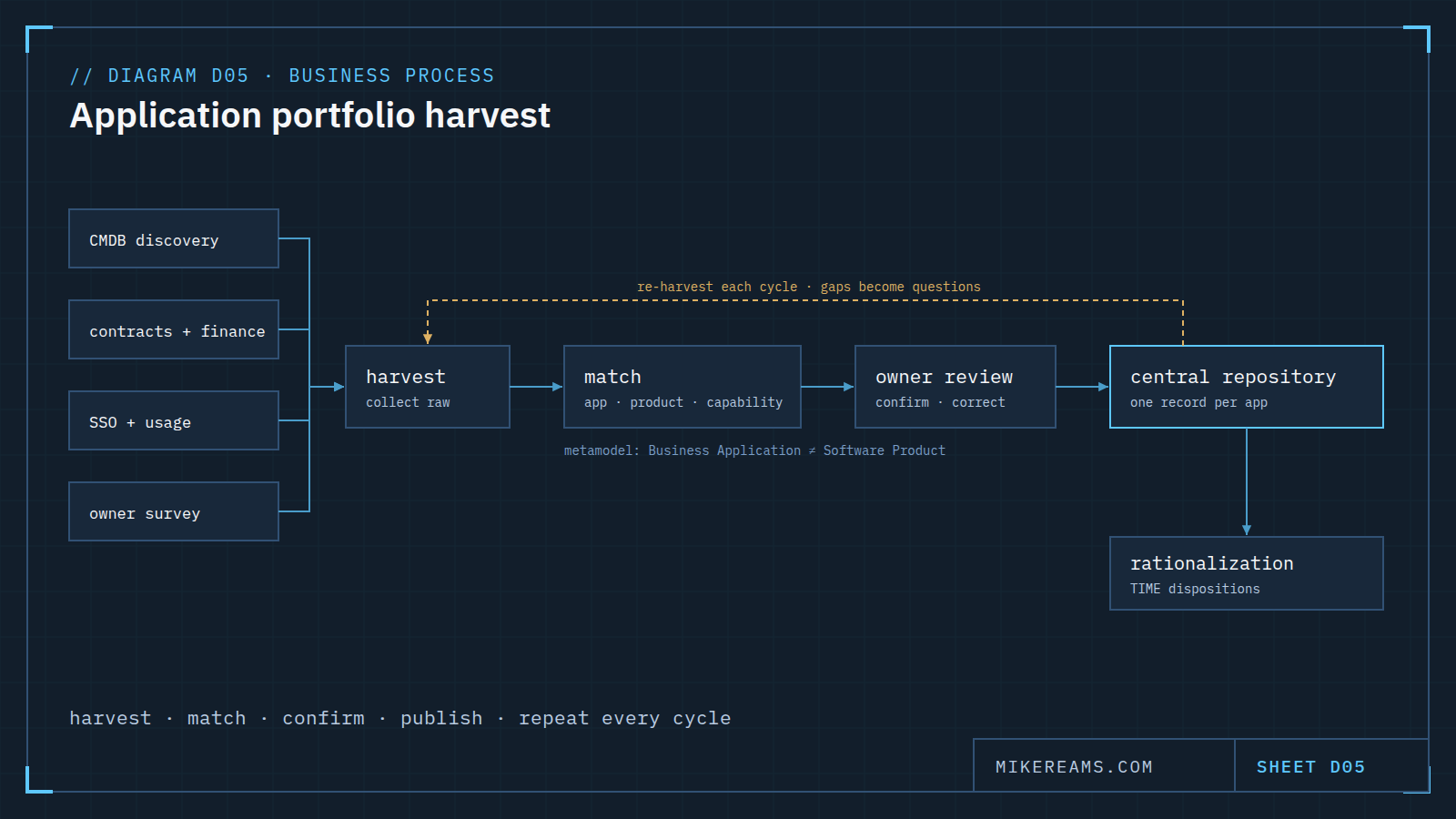
A portfolio harvest collects application data from discovery, contracts, usage and owners, matches it to one metamodel and publishes one record per app.
What it is
An application portfolio is only as good as the process that keeps it current. This process harvests what other systems already know about applications, matches it to one metamodel, has owners confirm it, and publishes a single record per application to the central repository that rationalization decisions are made from.
Where the data comes from
- Discovery in the CMDB: what is installed and running, and where.
- Contracts and finance: what is paid for, by whom, until when.
- Sign-in and usage data: who actually uses it.
- Owner surveys: what the business relies on it for, which no tool can tell you.
The steps
- Harvest raw data from each source without editing it.
- Match each finding to the metamodel: a Business Application, a Software Product or a capability.
- Owner review: owners confirm or correct their records.
- Publish one record per application to the repository.
- Decide: rationalization uses the published records for TIME dispositions.
The metamodel rule that matters most
Keep the Business Application (what the business calls it and relies on) separate from the Software Product (what was bought or installed). Mixing them double-counts the portfolio and hides cost. The same rule decides which record a new technology request creates.
Run it as a cycle
Each pass leaves gaps: applications with no owner, contracts with no application, usage with no record. Those gaps become questions for the next pass instead of guesses in this one.