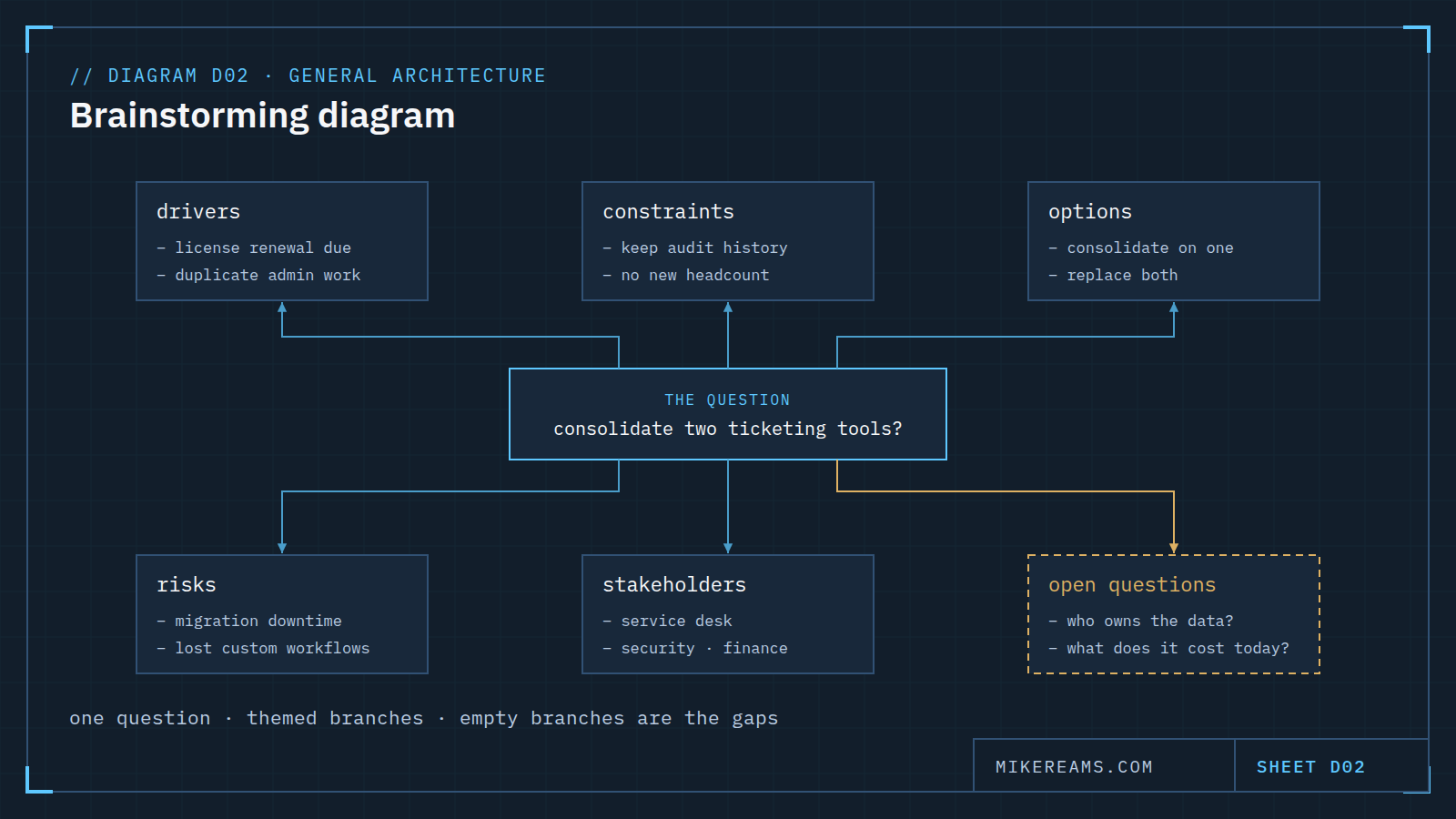
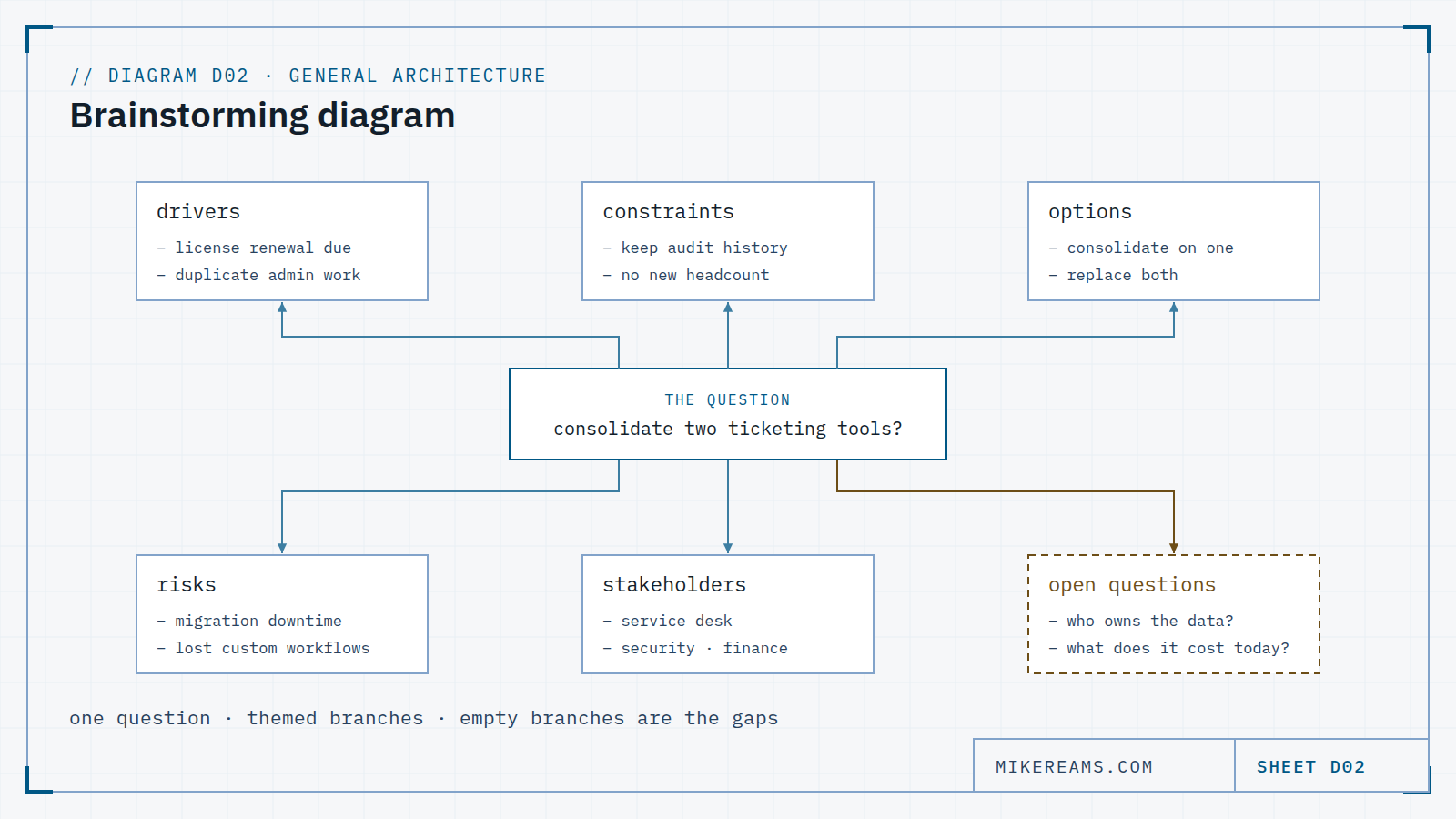
A brainstorming diagram puts one question in the center and groups ideas into themed branches, so gaps and open questions show up before design starts.
A brainstorming diagram, often drawn as a mind map, starts from one question and lets ideas branch out from it by theme. It is the cheapest diagram an architect draws and one of the most useful: it turns a messy conversation into a picture everyone can point at, and it shows which parts of a problem nobody has thought about yet.
When to use it
At the start of a piece of work, before anyone has proposed a solution.
In a workshop, to capture what a room knows without arguing about it yet.
Before an options analysis, to make sure the options cover the drivers and constraints.
When you inherit a problem, to map what you know and what you still need to ask.
How to draw one
Write one question in the middle. A question, not a topic: “consolidate two ticketing tools?” beats “ticketing”.
Branch by theme. Drivers, constraints, options, risks and stakeholders cover most architecture problems.
Keep each idea to a few words. If an idea needs a sentence, it is a finding for a document, not the diagram.
Give open questions their own branch. Mark them so they stand out, and give each an owner after the session.
Promote what survives. Options move into an options analysis, decisions into a decision record, risks into the risk log.
Common mistakes
Starting with the answer. A diagram built around a preferred solution only collects reasons to pick it.
One branch doing all the work. A crowded options branch and an empty constraints branch is a warning, not a result.
Keeping it forever. A brainstorming diagram is a working drawing. Once its ideas have homes, archive it.